
About the Notes
Why these Notes exist
My name is Lu Heng.
I am the CEO of LARUS Limited and the founder of the LARUS Foundation. I work at the intersection of Internet infrastructure, IP address markets, and global Internet governance.
Over the past years, I have been directly involved in disputes, policy processes, and structural failures across Regional Internet Registries (RIRs), including all five of them. What I write here is not theoretical commentary; it is drawn from first-hand exposure to how the Internet’s core resources are actually governed, misgoverned, priced, and controlled.
For readers with no prior exposure to Internet governance or IP address policy, A Beginner’s Guide to Lu Heng’s Notes offers a clear, accessible starting point written specifically for the general public.

Why These Notes Exist
The Internet’s most critical assets—IP addresses and the systems that govern them—are deeply misunderstood.
That misunderstanding has now become economically, legally, and strategically dangerous.
IPv4 is a scarce, irreplaceable service-enabling asset that underpins every cloud service, telecom network, and digital business on Earth. Yet its value is artificially suppressed by outdated policies, lack of ownership recognition, restricted liquidity, and governance captured by small technical circles rather than real asset owners.
This suppression is not abstract—it directly depresses the valuation of ISPs, cloud providers, and infrastructure companies worldwide.
At the same time, the institutions managing these assets operate as centralized choke points with weak accountability, no real failover mechanisms, and disproportionate power relative to their mandate.
This creates systemic risk: governance failures, political pressure, legal capture, or even financial distress at a single registry can threaten entire networks or regions. Phishing attacks exploiting fear of registry authority are a symptom of this deeper structural flaw.
These notes are my attempt to state the problem clearly, strip away institutional mythology, and articulate first-principles solutions:
- True ownership of number resources
- Mandatory portability
- Separation of administration from enforcement
- Drastic reduction of compulsory fees
- Ultimately decentralization of IP address registration itself
I also write to explain the economic implications plainly—why IPv4 is massively undervalued today, why it can rationally reach tens of trillions in value once markets are allowed to function, and why this represents the largest unrealized wealth transfer opportunity the infrastructure sector has ever seen.
Who This Is Written For
This is not advocacy for disruption for its own sake, nor personal grievance dressed up as theory.
It is a record of observations, arguments, and proposals intended for CEOs, board members, regulators, engineers, investors, and policymakers and public at large who rely on the Internet but rarely question the foundations it rests on.
If these notes are uncomfortable, that is intentional. Comfort is how structural failures persist.
How to read the Notes
Each Note answers one of these questions. They all lead to the same place: a record that stays reliable, kept by an institution that can always be replaced.
- Start with three Notes A problem, a question about mandate and a proposed answer. About forty minutes of reading.
- Follow one question Every Note belongs to one of six questions. Pick the one that concerns you.
- Read in order From Note 1 in December 2025 to the latest, in the order the argument was written.
- Who holds the power?Representation, authority and the claims made in the name of community.
- Who controls the value?IP addresses, markets and the difference between owning and asking permission.
- How should the Internet work?Names, numbers, protocols and decentralized coordination.
- What happens when a registry fails?Portability, operational continuity and the right to leave.
- How do the ideas become real?The businesses, institutions and practical choices behind the argument.
- Beyond Internet governanceReality, civilization, time and the wider worldview.
Before We Explain the World
The same thinking, hung on the walls
Eleven walls of the photography exhibition read from these Notes, and three carry Lu Heng’s own words from interviews. The photographs and the arguments come from the same twenty years.
 I went to the Netherlands on my own while I was still in high school.Hall 1 · Leaving the KnownOn the RoadLu Heng
 “I started my business at a very young age, selling game cards and providing connectivity to people.”Hall 1 · Leaving the KnownA World from One SeatLu Heng
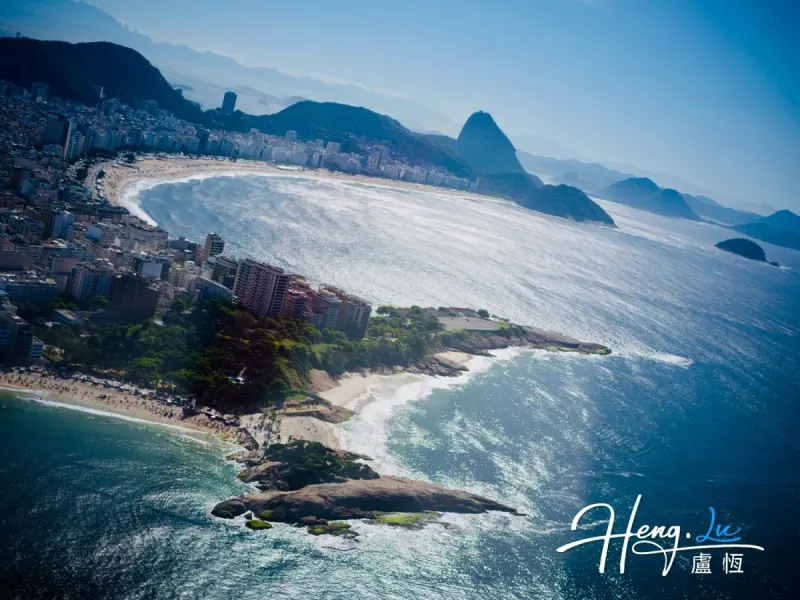 “The Internet is the first and only tool we have for global communication that does not require anyone’s permission to work.”Hall 1 · Leaving the KnownWhere the Land TurnsNote 29
 “Most conflicts persist because participants mix these layers.”Hall 2 · Where We Look FromInside, OutsideNote 20
 “I did not begin from opposition. I began from participation.”Hall 2 · Where We Look FromThrough GlassNote 43
 “Reality does not need to be invented. It only needs to be described.”Hall 2 · Where We Look FromWhen Things Become ShapesNote 36
 “The Internet works because no one owns it.”Hall 3 · The World We BuildA City in UseNote 2
 “Packets do not care who you are.”Hall 4 · Meeting Other LivesThey Look BackNote 31
 “Participation should not depend on who can afford flights and hotels.”Hall 4 · Meeting Other LivesRoom for Other LivesNote 11
 “Because a ledger is most trustworthy in the hands of those who remember that they did not create the world it records.”Hall 5 · The Scale of TimeLand Without UsNote 63
 “Every system eventually reaches a moment when it must either adapt to reality or attempt to freeze itself in place.”Hall 5 · The Scale of TimeThe Mountain Stays, Weather PassesNote 25
 Note 27 asks a question about the far future: once efficiency no longer needs people to drive it, what does a human life still contain?Hall 5 · The Scale of TimeWhen Light Comes ApartNote 27
 “I’m just an internet nerd and advocate for what I believe would be better for humanity.”Hall 6 · Life ItselfLight Close ByLu Heng
 Hall 6 · Life ItselfWater Close ByNote 8