
IP Address Management Trends in 2025: Automation, IPv6, and Hybrid Networks
Explore the key changes in IP address management, its capabilities and limitations, and how to choose tools—from automation and IPv6 to IoT, zero trust, and hybrid cloud.
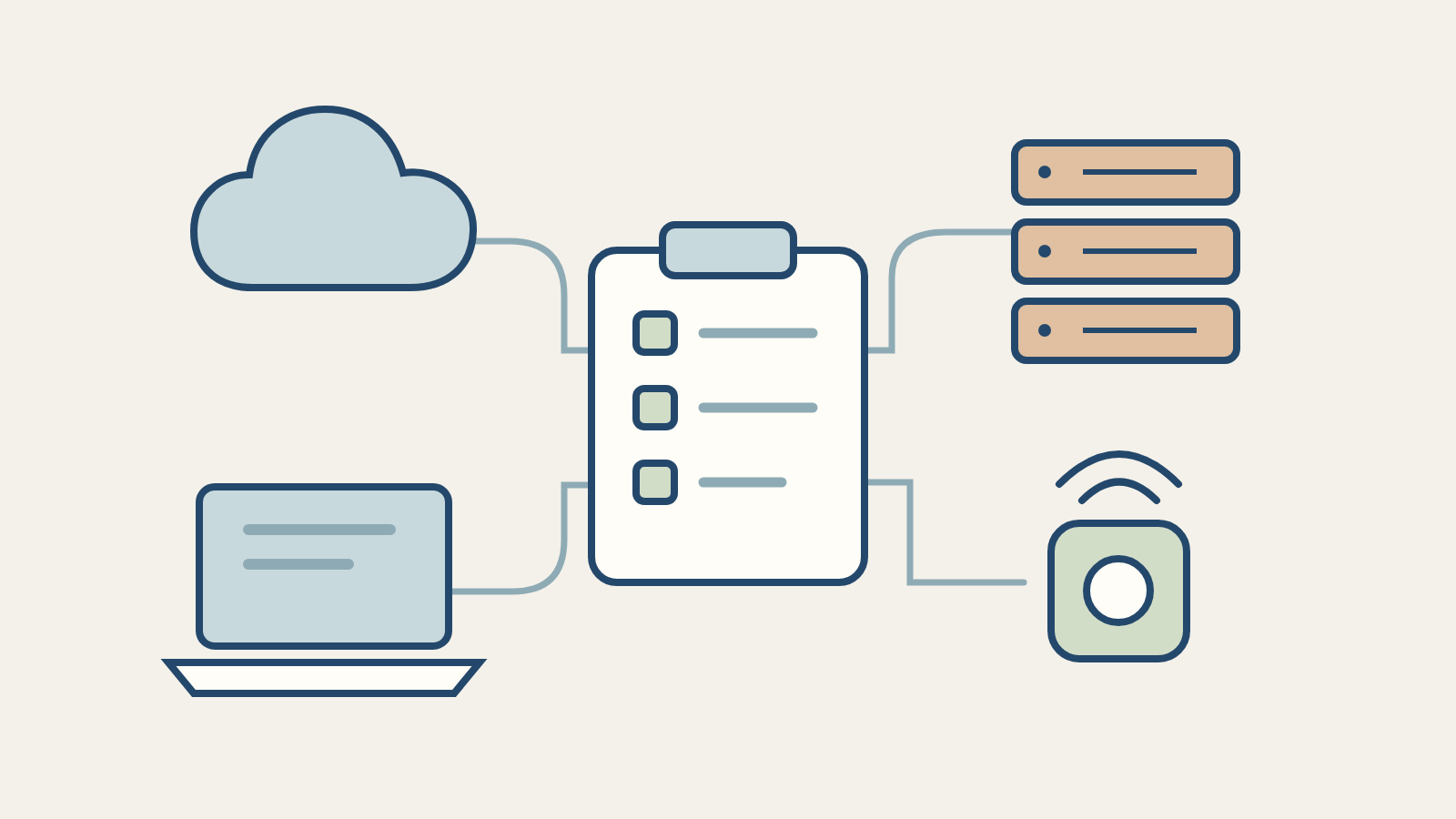
As enterprise networks extend into the cloud, branch offices, and Internet of Things devices, IP address management (IPAM) has to handle more than an address inventory. It also needs to keep pace with the creation, modification, and retirement of resources, while providing operations and security teams with records they can verify. These needs may drive growth in the IPAM market, but the available material is insufficient to verify its specific size or establish actual growth from 2024 to 2025.
Looking at network planning priorities for 2025, expanding tool capabilities deserve more attention than a market-size figure: unified IPv4 and IPv6 management, automation, cloud platform integration, and information sharing with security systems. IPAM is consequently becoming part of core network deployment processes. How much it can contribute still depends on the completeness of its records, the reliability of its integrations, and how teams use the information.
AI and Automation Drive IPAM Development
In September 2024, Gartner predicted that by 2026, 30% of enterprises would automate more than half of their network activities, up from less than 10% in mid-2023. This is a forecast about network automation, not a survey finding that “30% of large enterprises had adopted AIOps in 2025.” Nor can it be treated as an adoption rate for IPAM products.
For address management, the practical benefits of automation include detecting address conflicts, identifying unused address ranges, tracking utilization, and flagging potential capacity issues. Some products use AI to help analyze anomalies or make recommendations, but basic functions such as detecting duplicate addresses do not necessarily require AI. Teams should distinguish between verifiable detection results, model recommendations, and changes that have already been executed.
Tools can also connect to cloud platforms, security systems, and SD-WAN management workflows through APIs to allocate, update, and reclaim addresses according to predefined procedures. This can reduce duplicate data entry and common errors, but it does not remove the need to handle exceptions. The address pools, permissions, and change records that underpin automation still require human maintenance; configuration errors can also spread through automation.
IPv6 Adoption Remains Essential
It was IANA’s central pool of unallocated IPv4 addresses that was exhausted in February 2011. This does not mean that every region ran out of available addresses on the same day, much less that existing IPv4 addresses stopped working. IPv4 remains in operation, and progress with IPv6 deployment varies across regions and networks. Limited IPv4 resources and growing demand for connectivity make IPv6 planning an important part of address management.
IPv6’s 128-bit address space is far larger than IPv4’s, but having more addresses does not automatically make management simpler or networks more secure. Dual-stack networks need address, routing, and access-control planning for both protocols, rather than simply applying IPv4 configuration practices unchanged to IPv6.
Privacy mechanisms are also part of that planning. Temporary IPv6 addresses defined in RFC 8981 can reduce the risk of correlation associated with long-lived, fixed interface identifiers, but changing addresses also affects tracking and recordkeeping. IPAM and related logs need to retain sufficient timing information; an address cannot be treated as permanently identifying a particular device or person.
Mobile devices, IoT devices, and cloud services are making mixed environments more common. For example, an operator might provide IPv6 by default and IPv4 only when needed to ease pressure on its IPv4 address pool, while an enterprise may still have legacy systems that support only IPv4. IPAM should help teams check how both types of addresses are being used, whether address ranges overlap, and whether records match actual configurations. Migration requires testing with the specific devices and business applications involved to avoid outages caused by omissions in address planning or supporting configurations.
IoT and Network Complexity
The more sensors, cameras, and other connected devices there are, the harder it becomes to maintain an accurate device inventory. IPAM can combine information from DHCP, DNS, network discovery, and asset management systems to record the addresses devices use and organize them by purpose or location. This information can be passed to security systems to help teams investigate unfamiliar devices or unusual connections. Which devices can be discovered depends on the tool’s coverage, permissions, and data sources; the inventory cannot be assumed to be complete.
Some IoT devices have weaknesses such as default passwords, delayed updates, or excessively long maintenance intervals. Attackers may exploit these weaknesses to enter a network, steal information, or spread malware. IPAM records can help locate affected addresses and devices, but IPAM itself is not a vulnerability scanner or an intrusion detection system. Determining whether a device has been compromised also requires configuration data, traffic data, alerts, and other evidence.
For enterprises with thousands of devices, manually maintained spreadsheets can easily miss new devices or retain outdated records after devices have been retired. Automated discovery and regular reconciliation can ease this burden, while integrated alerts can flag unexpected connections to the network. Their value lies in helping teams identify and resolve discrepancies sooner, rather than guaranteeing that every attack will be prevented. A reliable inventory also helps teams estimate how many addresses and how much maintenance work the next expansion will require.
IP Address Management in a Zero Trust Strategy
Zero trust should not be understood to mean that access can be granted simply by confirming who owns a device. NIST’s description of zero trust architecture emphasizes that devices and users cannot be trusted by default solely because of their network location or asset ownership. Access to a specific resource still requires authentication, authorization, and consideration of the relevant device and session state.
IPAM can provide context about which device held an address during a particular period and which team managed it, helping security systems assess access requests. Shared addresses, dynamic allocation, and temporary addresses limit these associations, so address records cannot replace identity credentials. The decision to require further verification or deny access is enforced by the appropriate identity and security controls, not by an IPAM record on its own.
Continuous monitoring also depends on cooperation among multiple systems. Changes in address usage can be correlated with traffic and security events to help teams investigate unusual device behavior or attempts to access restricted resources. IPAM supplies investigative leads; determining whether an alert indicates an attack still requires context.
The principle of least privilege requires devices and users to receive only the access they need to do their work. For example, a sensor that needs to reach a particular service should not therefore receive access to the entire internal network. Address groupings and purpose information in IPAM can inform firewalls, network segmentation, or other access controls, with those systems enforcing the actual restrictions. Configurations and changes need to be coordinated to avoid blocking legitimate business activity as well.
Cloud services, remote users, and a changing population of devices make these relationships harder to track. Integrating IPAM with a zero trust architecture should clarify the relationships among addresses, devices, identities, and access rules while preserving each system’s responsibilities.
Cloud, SD-WAN, and Hybrid Environments
An enterprise’s address space may be distributed across data centers, multiple cloud platforms, and edge nodes. By connecting to cloud platforms through APIs, IPAM can synchronize changes to virtual networks and address ranges. For example, Infoblox’s NIOS 8.5 network discovery documentation lists support for discovering relevant resources in VMware, OpenStack, Azure, and AWS environments. Exactly what can be seen and managed still depends on the version, permissions, and configuration in use.
SD-WAN offers a new way to manage connections between branch offices and cloud services, while also increasing the need for synchronization across systems. IPAM can support address pool allocation and change tracking to reduce problems such as overlapping ranges or duplicate allocations, but it does not perform every aspect of SD-WAN configuration on its own. Deployments across locations should verify address planning, routing, and application reachability. Teams also need to be able to trace the last successful change when an integration fails.
Compliance and Auditing
Address allocation and change records help establish which device or resource an address was assigned to at a given time, who made a change, and what changed afterward. Identifying the actual user also requires identity records and other network logs. IPAM can retain information such as the person making a change, the time, the address range, and the associated ticket to support audits and internal reviews. Which records must be retained, and for how long, should be determined by applicable requirements and business needs, without assuming that every enterprise has the same logging obligations.
During a security incident, these records can be used alongside DHCP, identity, network, and device logs to reconstruct what happened. Consistent timestamps, complete records, and appropriate access permissions all affect their usefulness. A single address record cannot prove that a particular person carried out an attack, nor can it independently establish that an incident was handled properly.
Choosing Tools in 2025
Tool selection can start with practical tasks: Do you need unified IPv4 and IPv6 management? Can the tool show utilization and detect conflicts? Does it offer reliable cloud interfaces? Does it support the permissions and activity records you need? These core capabilities are easier to verify than a broad claim of “intelligence.” AI-assisted features should also be tested against your own scenarios to assess the quality of their recommendations and the cost of errors.
Infoblox, BlueCat, Cisco, and Microsoft are all worth considering for relevant network management products or integration ecosystems, but they do not constitute a set of products with identical functionality. Nor can a brand name alone establish that they all support the same cloud and on-premises deployment options. Microsoft’s IPAM documentation, for example, describes its address infrastructure management and DNS- and DHCP-related capabilities. An evaluation should examine the specific product, version, interfaces, licensing, and operational requirements before confirming whether it can integrate with the existing environment.
Expanding tool capabilities give network teams more choices while also making comparisons more demanding. A suitable solution should make everyday allocation, troubleshooting, and future expansion easier to manage. The benefits of automation or security integration need to be demonstrated through actual operational results.
Frequently Asked Questions
Which IPAM developments deserve attention in 2025?
The main areas are automation, a unified view of IPv4 and IPv6, and integration with cloud platforms and security systems. AI-assisted analysis is another direction, but these capabilities are not available in every product, nor did they all first appear in 2025.
Why is IPv6 important?
IPv4 address space is limited. IPv6 offers a larger address space to support long-term network growth. Exhaustion of the central free pool does not mean existing IPv4 addresses are unusable. Dual-stack environments still need to be managed during migration, and IPv6 does not automatically solve security problems.
How is AI changing IP address management?
It can help identify anomalies, analyze utilization, and forecast capacity needs. Tasks such as detecting address conflicts and finding unused addresses can also be handled by conventional automation. Model recommendations should be checked against actual data before deciding whether to adjust configurations.
How does zero trust relate to IPAM?
Address records can provide context for devices and access requests, but trust cannot be established solely from an address or device ownership. Authentication, authorization, and access restrictions remain the responsibility of the appropriate security systems.
Do I need to replace my IPAM tool?
First, check whether your current tool meets your practical needs for IPv6, address records, cloud integration, permissions, and auditing. The absence of a particular AI feature does not automatically mean replacement is necessary. If key capabilities are missing, compare the costs of upgrading, integrating, and replacing the tool before deciding what to do next.