
Why It Pays to Check IP Risk Before a Transaction
How IP risk scores support fraud prevention, how to interpret their results, and what published case studies and data can tell us.
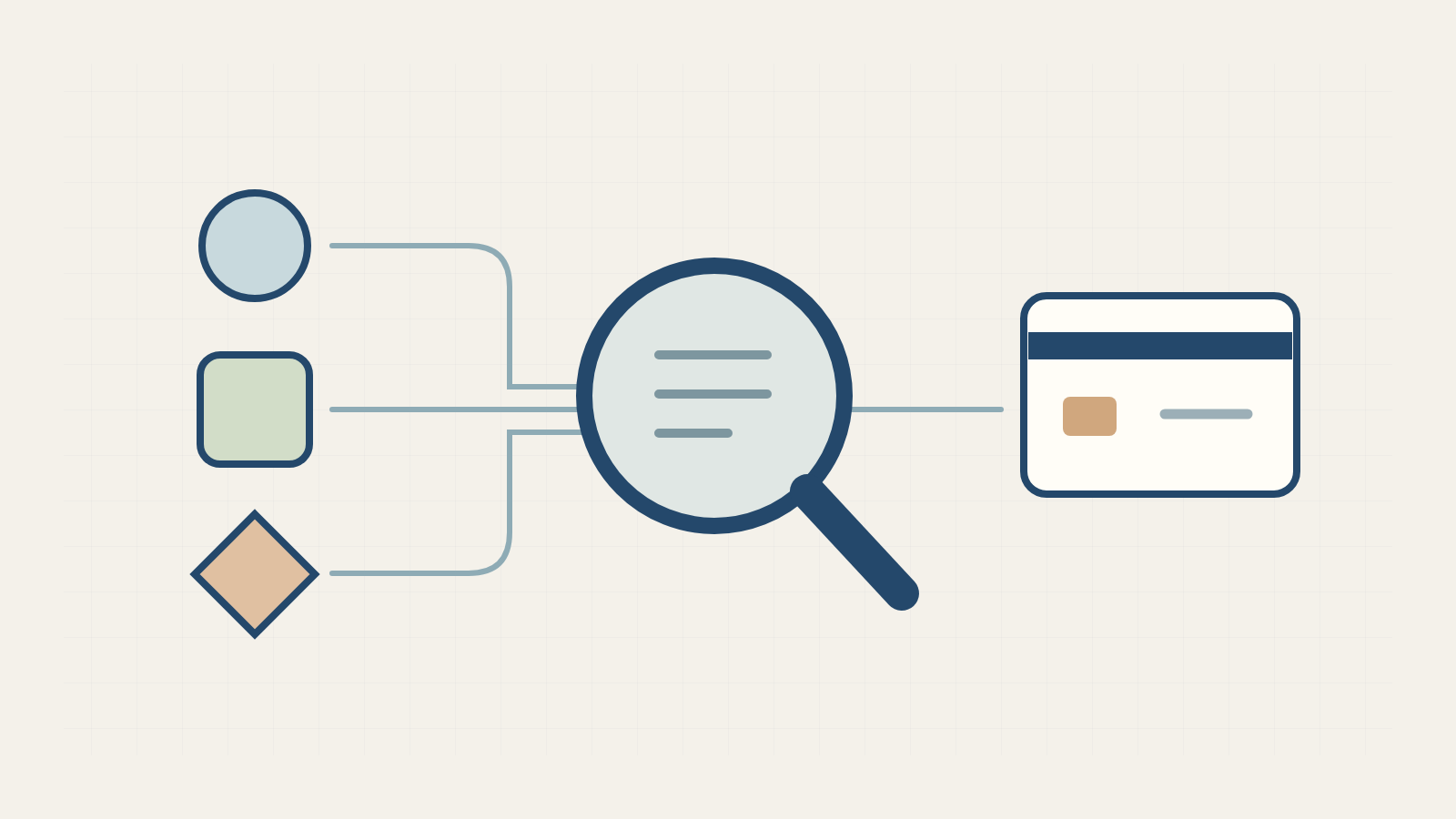
Fraud prevention requires interpreting the signals associated with an IP address before deciding how to handle a transaction.
Online fraud can cause substantial losses. Checking the risk associated with an IP address before a payment, login, or data exchange helps identify signals that warrant attention. The value of that check depends on how it is combined with the other information available.
IP geolocation and reputation can provide real-time context. Ignoring them can leave blind spots; treating them as conclusive evidence can also lead to mistakes. To put the scale of the problem in perspective, the 2024 Nilson Report forecast worldwide card fraud losses of $36.37 billion for 2026. This was a forecast about cards, not a figure for all cyberfraud or a measurement of losses caused by IP addresses.
What Are IP Risk Scores?
An IP address enables communications to be routed over the Internet, but it does not uniquely identify a person or device. Multiple devices can share a public IP address through NAT, and assignments can change. A risk score summarizes signals associated with an address; it can serve as an indicator in an assessment, much like other scoring tools. Some services use a scale from 0 to 100, but the scale and its meaning depend on the provider.
Common signals include observed behavior, location consistency, links to known malicious activity, and the use of VPNs or proxy servers. Spam complaints and inclusion on blocklists may also play a part. It is essential to distinguish a reputation score, where a high value may indicate greater trust, from a risk score, where it may indicate greater danger. Their thresholds should not be used interchangeably. Detecting a VPN does not prove fraud, either.
Auditing Risk Scores
Reviewing these scores means checking what data the service uses, how it interprets that data, and what decision it can support before a transaction. Businesses can check an IP address against reputation sources and incorporate the result into their payment, access, and data exchange workflows. A properly evaluated integration can speed up reviews and reduce errors, but a score on its own does not guarantee that unauthorized access or losses will be prevented.
Fraud and Network Signals
Attackers can use proxies and change addresses to make their location harder to identify. That does not allow any specific share of worldwide losses to be attributed to them. Nilson recorded $32.33 billion in card fraud in 2021 and $33.83 billion in 2023; its 2024 report projected $36.37 billion for 2026. Meanwhile, UK Finance’s historical data records £551.3 million in fraud losses on UK-issued cards in 2023, of which £360.5 million involved remote purchases. These are defined categories, not an overall tally of online payment fraud.
Account takeover, synthetic identity fraud, and simultaneous applications for multiple loans, known as “loan stacking,” require a range of signals to be examined. In Regula’s 2023 study, 46% of the companies surveyed had experienced synthetic identity fraud; 90% considered it a growing threat for the years ahead. The survey covered 1,069 decision-makers across five sectors in eight countries: its findings do not describe all businesses. VPNs can make location harder to interpret, but they also have legitimate uses for privacy and remote access. Some free services turn users’ devices into exit points for other people’s traffic; that risk does not make every VPN user suspicious.
How IP Risk Is Assessed
The analysis can draw on geolocation services, VPN and Tor node detection, and blocklist reputation data. In systems such as SEON, rules assign values to signals, and configured thresholds guide approval, review, or rejection. The weights and categories belong to a particular model; they are not a universal measure of risk.
APIs allow network data to be incorporated into a real-time assessment. Depending on the service, that data may include provider characteristics, indications of open ports, or how frequently an IP address changes. It is necessary to check what each data point actually measures. In an analysis published by MaxMind in August 2025, the average per-account improvement in the area under the precision-recall curve, or PR-AUC, relative to random guessing was 43% for the anonymous IP indicator, 125% for the IP risk score, and 300% for the overall minFraud score. The comparison baseline was random guessing. These were not guaranteed accuracy improvements for every business.
A business can allow transactions it considers low risk to proceed and request additional checks, such as multifactor authentication, when relevant warning signs appear. In credit applications, IP signals can guide an investigation, but they should not replace a full assessment or, on their own, justify rejecting an applicant.
Vendor Case Studies and Examples
- Buffered. SEON reported that this VPN provider reduced its chargeback rate by 91% in thirty days. The intervention combined IP analysis, machine learning, and custom rules. The result is specific to that case and does not isolate the effect of a single score.
- Simplex. In the case study published by MaxMind in 2021, the cryptocurrency payment gateway used minFraud data on IP geolocation, email risk, and financial institutions to feed its algorithm and support manual review. That case study does not document a 300% improvement; that figure comes from MaxMind’s later comparative analysis described above.
- TrustDecision. Its explanation of risk management shows how linking IP addresses, device fingerprints, and contact details can help investigate fraud networks. It describes the technique; it does not document a financial institution dismantling a specific network.
How to Interpret Expert Views
The value of IP data depends on its context. Proofpoint’s technical documentation on reputation lists cautions that the categories describe observed behavior and should not be treated as a definitive binary allow-or-block decision. Reviewing signals before a transaction can be useful, but it does not support claims that almost all fraud uses VPNs or that a single score is suitable for every business.
Integration into Business Strategy
Checks can be placed at login, payment, and API calls. Combining IP data with device and transaction signals provides context, though never an infallible picture. Businesses need to identify their applicable data protection and payment security obligations. The GDPR requires security measures appropriate to the risk, and PCI DSS includes specific controls and analyses; an IP reputation check alone does not demonstrate compliance. Data processing must also be justified and limited to what is necessary.
Challenges
Addresses can change, shared networks serve different users, VPNs alter apparent location, and blocklists can contain errors. For a small business, the cost of integration and review also matters. Combining sources and using machine learning can help, but this requires measuring results against the business’s own data, reviewing false positives, and correcting mistaken decisions.
Future Trends
Artificial intelligence can expand the analysis of historical behavior and the detection of anomalies. Quantum-resistant techniques and blockchain-based reputation records are possibilities that should be evaluated separately, without assuming they will resolve issues with score quality. The spread of real-time checks also does not show that they will become universally mandatory or that an international standard already requires an IP audit before every transaction.
Frequently Asked Questions
- What is an IP risk score?
It is an indicator that summarizes signals associated with an address, such as its reputation, apparent location, or network type. The scale and the direction of the score depend on the service. - Why check it before a transaction?
It can flag inconsistencies that warrant checking before the transaction is authorized. A VPN or a blocklist entry requires interpretation; it does not prove fraud or guarantee a particular percentage improvement. - How is that check implemented?
Through APIs integrated into access and payment workflows, with evaluated criteria for deciding when to allow, review, or stop a transaction and when to request additional checks. - What are the most common challenges?
Dynamic or shared IP addresses, apparent location, outdated data, and false blocks. Combining sources and reviewing results helps identify and correct errors. - Can a small business afford it?
It needs to assess the cost of the service, integration, manual review, and the impact on legitimate customers. The 91% reduction reported in the Buffered case study is a specific result, not a promise of a return for every business.
Leave a response
Sign in with an existing account to join the discussion.