
Why Enterprises Should Audit IP Risk Scores Before Any Transaction
An IP risk score is a signal, not a verdict. The useful audit happens before a login, payment or API request becomes a costly incident.
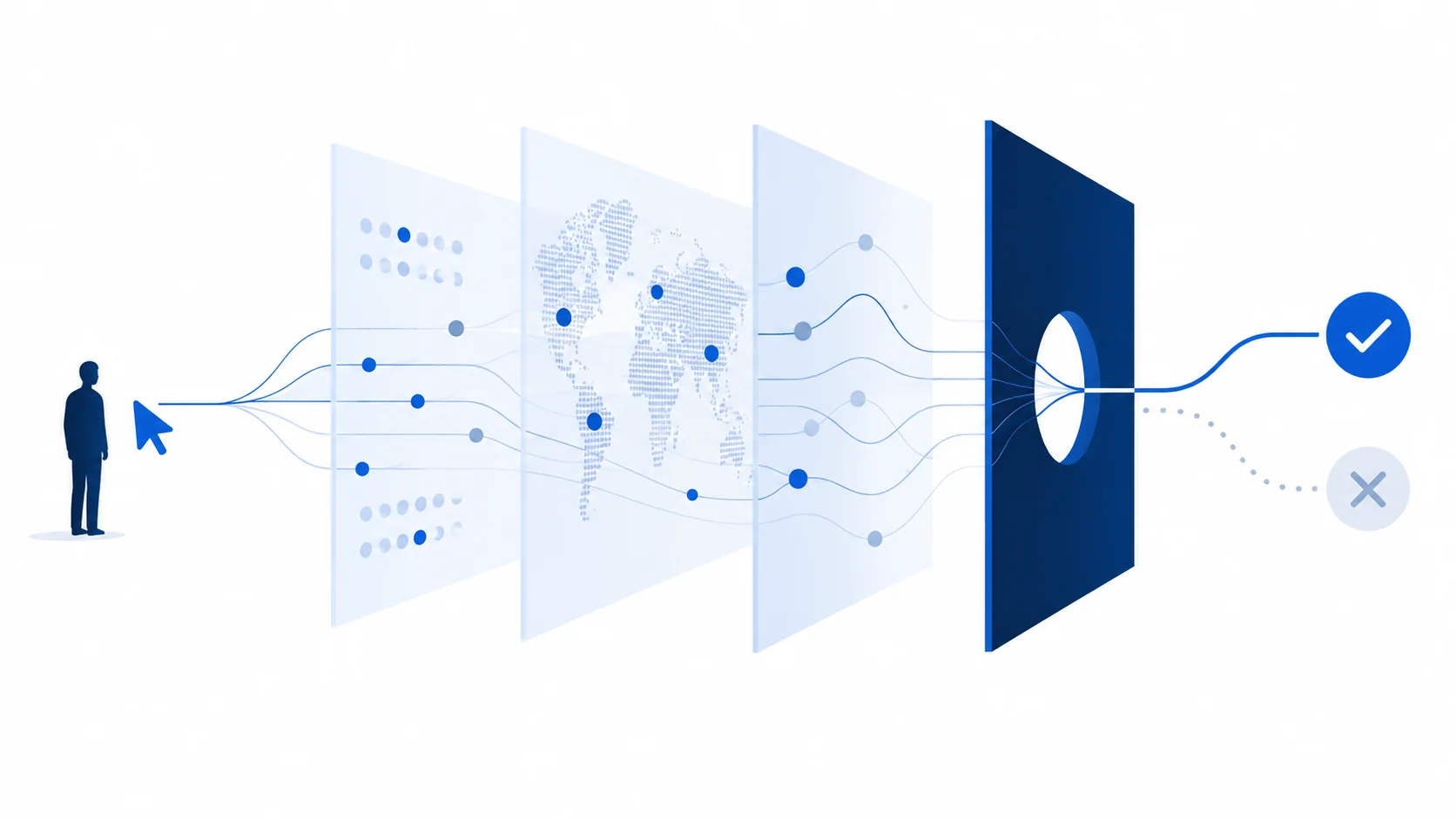
Before the transaction is where you still have choices
By the time a payment is reversed, an account is taken over or a partner blocks a request, the organisation is already paying for a decision it made earlier. The practical question is simple: what did the system know about the connection before it trusted the request?
An IP risk audit puts that question at the right point in the journey. It does not ask whether an address belongs to a good person or a bad person. It asks whether this connection fits the pattern the business is prepared to trust, and what additional evidence is needed before access is granted.
What an IP risk score is—and what it is not
An IP risk score is a compact reading of several signals associated with an address or network. Depending on the data source, those signals may include reputation history, the type of network, signs of a VPN or proxy, geolocation consistency, known abuse, and how quickly the connection changes.
The score is useful because it makes a large amount of network information available at decision time. It is dangerous when treated as a verdict. A shared office, a mobile network, a traveller, a privacy-conscious user and an attacker can all appear unusual for different reasons. The score should prompt a better question, not replace judgement.
Read Note 68, The Economics of Network Identity
Read the pattern, not one alarming flag
A single signal rarely explains enough. A datacentre address may be exactly what a legitimate cloud workload requires. A VPN may protect a user on an unsafe network. A sudden location change may reflect travel, a mobile carrier or a shared account rather than fraud.
The useful audit combines signals with the context of the request: the account history, device or session evidence, the value of the action, the normal geography of the user, and the pace of recent attempts. This is where an address becomes part of network identity rather than a label pasted onto an individual.
- Is the address associated with a history of abuse or only with a network type that deserves another question?
- Does the location fit the account and the session, or is there a credible reason for the change?
- Is the request unusually fast, repeated or connected to other attempts?
- Can the system explain which signals changed the decision and when the underlying data was last refreshed?
Turn the score into the next proportionate question
The audit is valuable only when it leads to a clear action. A low-risk connection may continue normally. A connection with mixed signals may need a second factor, a device check, a short delay or human review. A high-risk pattern may justify blocking the action while preserving a path for a legitimate customer to recover.
This is a better operating model than one threshold that silently rejects everyone who looks different. It gives the business a way to protect money and accounts while keeping the cost of false positives visible.
Do not turn privacy or movement into guilt
An IP address is not a person, and an unusual IP is not proof of intent. Rules that treat VPN use, a foreign location or a cloud provider as automatic guilt will eventually stop legitimate customers. They also teach attackers which superficial signal to avoid.
The audit should therefore record uncertainty. Keep the reason for the intervention, give the user a recoverable next step, and measure both the fraud you stopped and the good activity you interrupted. Security becomes more trustworthy when the system can explain its limits.
Note 45, On the Manufactured Narrative of IPv4 Scarcity
Make the audit part of the operating path
A score that appears only in a dashboard is an observation, not a control. Put the audit where the business makes the decision and give the result an owner. A durable implementation should answer:
- Where is the score requested: login, payment, account change, API access or another high-value action?
- Which data source supplied it, when was it refreshed, and what happens if the service is unavailable?
- Which response belongs to each risk band, and who can review an exception?
- How are decisions, appeals, outcomes and changes to the rule recorded?
- How can the organisation replace a provider or data source without losing its history and continuity?
This is also a network-identity question. The data is valuable because other systems rely on it, so the business must know who maintains it, what can be verified and how to change course when the signal is wrong.
The urgency is operational, not theatrical
Fraud tactics change quickly, but urgency does not justify opaque automation. The immediate work is to find the places where a request can become expensive, add a small set of explainable network checks before that point, and review the results with real outcomes.
Start with one journey. Measure how many high-risk requests were challenged, how many legitimate users were delayed, which signals were actually useful and how fast the team could recover from a mistake. Then expand the control only when the evidence earns it.
Note 72, The Bill of Rights of Uniqueness Coordination
A risk score is most useful when it preserves the ability to choose. It should help an organisation slow down when the evidence is weak, move quickly when the pattern is familiar, and correct the system when reality proves it wrong.
From a number to a more accountable network
Auditing IP risk before a transaction is not about worshipping a number. It is about making an invisible dependency visible before it becomes a loss. The address is one clue in a larger relationship between a user, a service, a network and the institutions that record and interpret what happens.
When those relationships are readable, a business can protect customers without pretending that uncertainty has disappeared. It can challenge a bad signal, change a provider and keep improving its decisions. That is the standard an IP risk system should meet.
Continue with the guide to network identity and operational continuity